Stream

Honour’s + a tad of Employment
Community Based Modular Hydroponics
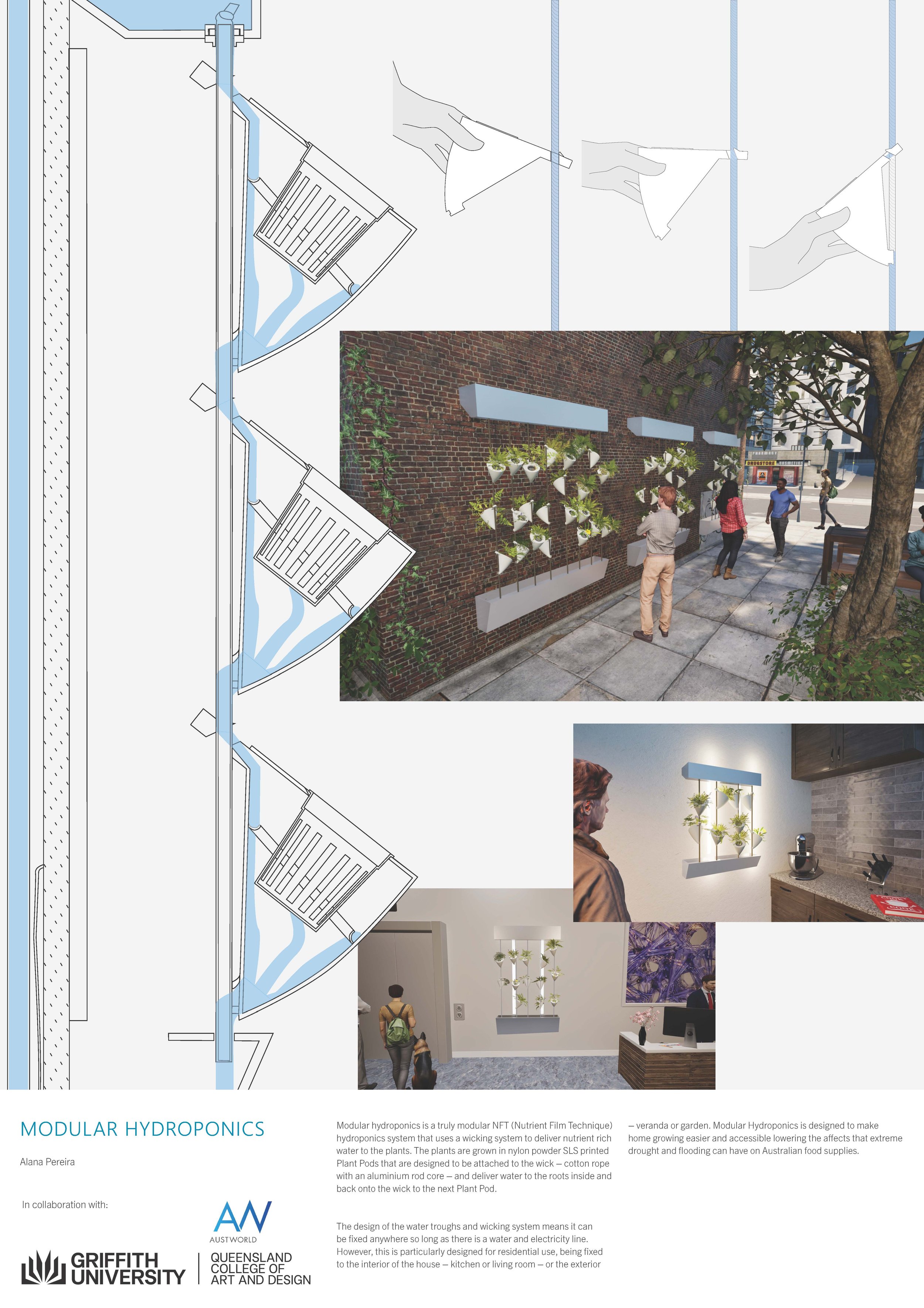
Original Modular Hydroponics Station
In 2025, I designed a modular hydroponics station as a product design project. Originally, the intention was for it to help alleviate food insecurity and food deserts. But the final product had accidentally moved away from that and became inaccessible due to the nature of how it is installed.
New Employment based design
Food is a human right not a privilege, and climate change is getting in the way.
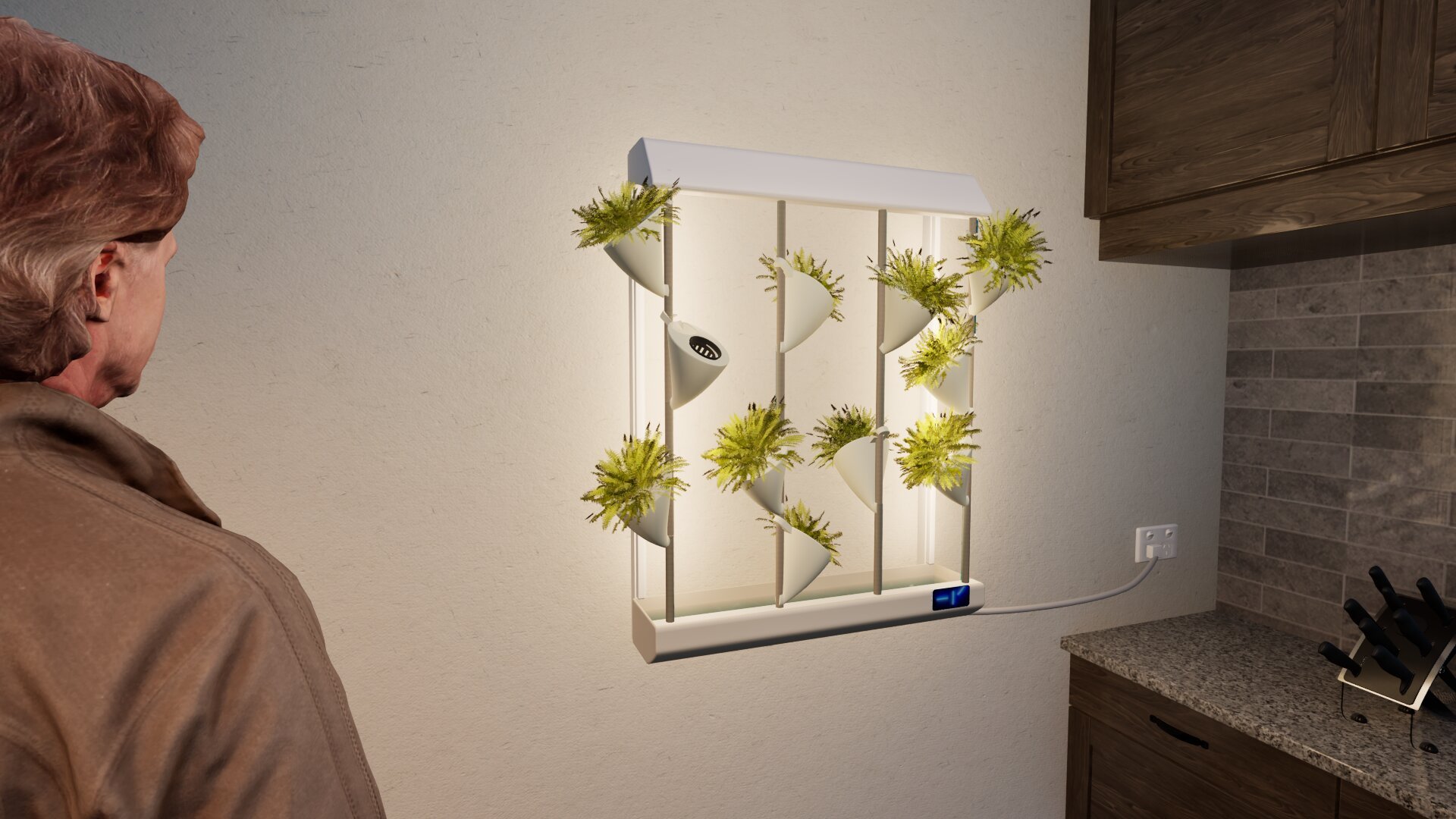
Mod’ponics gives Australian’s back control over their access to fresh nutritional foods, making us more resilient to the increasingly devastating affects of climate change. It allows household’s to grow their own fresh foods within their residence and lower their susceptibility to climate related disasters. Allowing users a degree of control over their food source and supply within their homes. The modular system uses plant pods
that can be quickly and easily positioned anywhere along the wicking ropes without disassembly. It’s built onto a lightweight aluminum frame that can be easily mounted to the wall and positioned anywhere near a power and water source.
Mod’ponics - a Modular Hydroponics station
Mentor Engagement
Dr Anthony Franze
- Post Doctoral researcher, Lecturer
Dr Mieke van der Bijl-Brouwer
Feedback on original design
Read through and gave drafting feedback on honours proposal
Gave additional resources on how to write academically for research and write research questions
Gave resources and projects related to my project
How I implemented the feedback
Applied feedback where possible in proposal
Used research resources and applied to the project - Substation 33 resource
Further feedback from Anthony - said feedback was applied well and offered to continue helping with project in future.
- Independent researcher, Complex Societal Problems
Feedback on original design
Provided further research resources and case studies
Solution suggestion: community based research
How I implemented the feedback
Used the example case studies provided to research further other projects needed to gain understanding of the project
Dr Van der Bijl-Brouwer was not available for further feedback post design.
Micheal Rossignuolo
- Creative director, Kataput design
Feedback on original design
Refocus back into the User Expereince, maybe this isnt the right audience
Push for its capabilities
How does the whole system come together
consider pod sizes and adding plant to the project
How I implemented the feedback
Reconsidered how the user would’ve used the original design and the effect that would’ve had.
Consider further the manufacturing and how all the parts come together, thinking about the details and adding some considerations towards the system as a whole
Didn’t consider pod sizes, instead focused into the design as a whole as I found it would be more beneficial at this stage to look into it that way
Mr Rossinguolo was not available for further feedback post design.
Feedback and survey’s
Anonymous, uni student living out-of-home
“I still do visit a lot of the community spaces in east Brisbane Woolloongabba area now by connecting through the greens program”
Steph, 21, uni student, previously lived in low income household
“When I was a kid we had frozen meals, milk and frozen bread that we would thaw out. We lived on toast for the week.”
“I guess we just ate whatever was cheapest.”
Zoey, 20, raised in low income household
Google forms survey response
Key notes
Used community food banks in past
Has relied on community foodbanks for food previously
Often visits community spaces, like the park to spend time with family as it is free
Has used the resources at a community garden
Agrees that eating healthy is a priority and actively tries to eat health foods
Conclusions
Based on these testimonials and responses, anyone living with food insecurity will access whatever foods they can, even if it is a less nutritious option. I can draw the conclusion that a local community based food provider that is easily accessible could fill this gap. It would give low income households access to cheaper foods that are also more nutritious as well as possibly give them better mental well being through connection with others. In the next phase of this project, I would take a step further into exploring people and their connection to commmunity.
Next steps…
Now after doing more development and research into this topic to find the viability, I have decided I’m not sure how well it will work. Based on the case studies and the complexities of such agricultural systems I’m not sure how sustainable they will be within a community context that I am suggesting. However, I understand that research is all about asking a question and exploring a topic even if you have some doubts. So what I intend to do next is:
Apply for and being Honour’s year 2026 (and get a job within a studio)
Begin further research into what SEQ communities are affected most by food insecurity
Collect qualitative data, through literature reviews, interviews and so on from people living with this issue as well as community spaces that need the
Figure out, “is a modular hydroponics station even beneficial for such a problem?”
Find if there are any other specific ways that
Further research into how we can get people more involved within their communities more regularly and beyond the basic interactions